How are electric rates determined?
Electric rates are based on the actual cost of producing and delivering safe, reliable power to the community.
Because Alaska Electric Light & Power (AELP) is a regulated utility, it cannot simply raise or lower rates when costs change. Changes to AELP’s rates must be supported with detailed studies that are reviewed by the Regulatory Commission of Alaska (RCA) through a formal public process.
While the RCA has the authority to approve a utility request for a rate increase as filed, it typically does not and instead follows a process that involves three steps.
The first step is to grant an interim rate increase that goes into effect 45 days after the utility files its request. Customers are protected from being overcharged during the interim period because, if at the end of the rate case the RCA determines that the interim rates are higher than the utility should earn, the utility must refund any overcollection.
The second step is a long period of investigation, when the Office of Regulatory Affairs and Public Advocacy (RAPA), which is part of the State of Alaska Department of Law, and any other party that is granted intervenor status by the RCA, investigate the utility’s request for a rate increase. This investigatory period culminates with a public hearing before the RCA during which all parties present their cases.
The final step is for the RCA to review the evidence submitted by the parties and issue a final order that determines the rates that will be in effect until the next time the utility files to request a change to rates.
What is included in a rate filing?
When AELP submits a request to change its rates, it uses financial data from the previous year known as the “test year” to provide evidence of actual costs and revenues. To ensure test year costs are allocated equitably across types of customers -- equity meaning that each rate group is paying their fair share of system costs -- a cost of service (COS) study is completed as part of the rate-making process. The COS study is a detailed analysis that determines how much of the electric system is used by different rate customers like residential and commercial, and then allocates system costs to those customers based on their usage patterns. The COS study and the revenue requirement, along with other supporting studies, are used to determine rates.
By the time the RCA completes its review, nearly one and a half years may have passed from the time AELP submitted its rate case, meaning the approved rates reflect costs that are already outdated. This time lag, known as regulatory lag, creates a situation where rates are nearly always catching up to past costs rather than keeping pace with current ones.
Why are rates going up?
Since AELP’s last test year in 2021, it has invested close to $65 million in critical upgrades and infrastructure improvements to keep Juneau’s electric system safe and reliable.
Operating in Southeast Alaska’s rugged and isolated terrain is challenging and costly. These investments allow AELP to maintain one of the most reliable electric systems in the country. Every dollar spent helps ensure AELP can continue to provide stable, clean, and dependable service to the citizens of Juneau, even in harsh weather conditions.
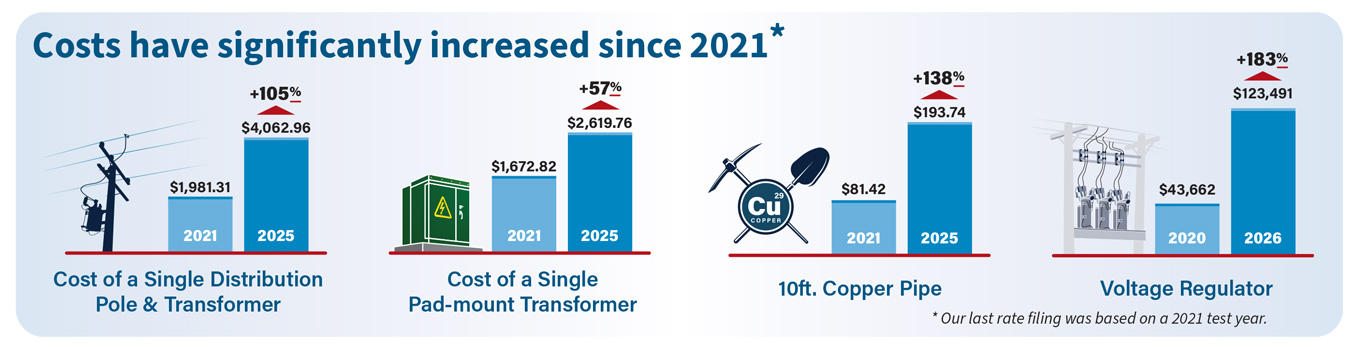
Why doesn’t AELP “save up” for upgrades or emergencies?
Under Alaska regulatory rules, AELP’s rates can’t include any costs from projects that aren’t finished or equipment that hasn’t been delivered. This means that AELP pays the upfront cost for construction projects or things such as new bucket trucks, and AELP cannot begin to recoup the cost for those things until the RCA approves a rate increase. This ensures no customer pays for infrastructure or equipment that isn’t operating during the time that customer purchases electricity from AELP.
Why doesn’t AELP adjust rates more gradually?
Rate adjustments must go through the RCA’s formal and lengthy review process, which can take about one and a half years from start to finish. Each filing is a complex and expensive undertaking requiring extensive financial records, operational and maintenance data, legal support, and public review.
For that reason, AELP only files for a rate adjustment when it’s necessary or required, such as when:
- Major infrastructure investments have been made
- Rising costs make existing rates insufficient to cover the cost of providing service
- When required to by the Regulatory Commission of Alaska
Filing more frequently would increase costs for customers, since the expenses associated with preparing and processing rate cases must be included in future rates. The substantial increase in workload associated with filing more frequent rate cases would require hiring additional dedicated staff that AELP does not currently have, resulting in increased costs and rates.
What’s the bottom line?
Electric rates are not arbitrary. They’re the product of real costs, careful analysis, state oversight, and a commitment to balancing affordability with long-term reliability. AELP’s mission is to deliver safe, reliable, and reasonably priced electricity to Juneau, while responsibly managing the infrastructure that powers our community.
Every dollar collected through rates goes directly toward:
- Maintaining and improving the electrical system
- Ensuring fair recovery of necessary costs to ensure financial stability
- Meeting safety and reliability standards